









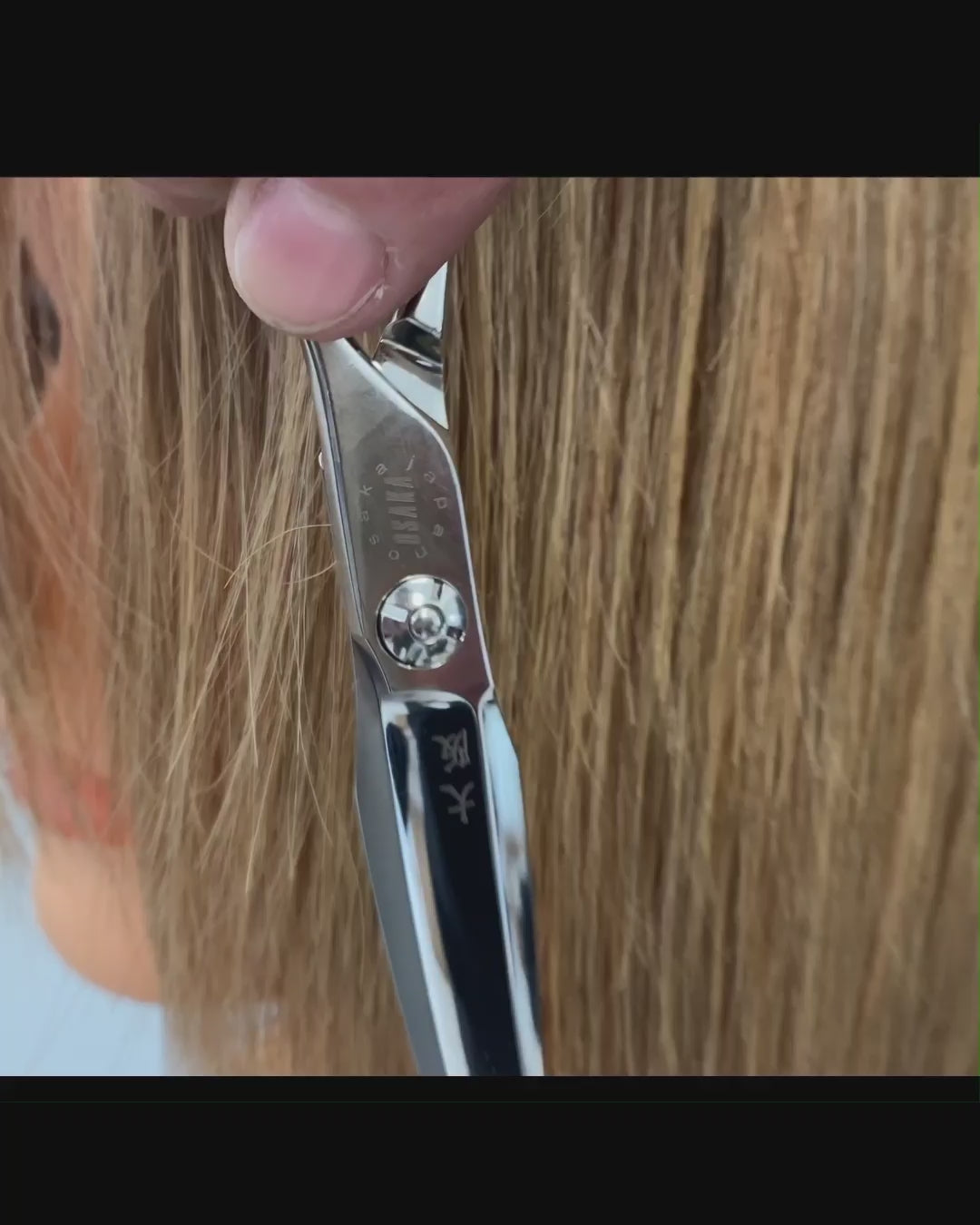


Scissors Not Cutting Properly? Here's What's Wrong
Something’s off — and you felt it mid-cut before you could name it.
Hair folding instead of slicing. Extra effort in your hand. That subtle drag that wasn’t there six months ago.
If your hairdressing scissors aren’t cutting properly, the problem is usually hiding in plain sight. Identify the cause, and you’re already halfway back to smooth, confident cutting.

Why Hairdressing Scissors Stop Cutting Properly
Dullness doesn’t happen overnight. It creeps in gradually until a client winces or your cut lines start looking ragged.
Daily salon use slowly wears down the micro-bevel of the blade edge. Add product residue and oils in the pivot, and suddenly your scissors are working against themselves with every snip.
Common Causes of Dragging Scissors
- Micro-bevel wear from daily cutting
- Product and oil buildup in the pivot
- Knocks or drops creating microscopic chips
- Cutting non-hair materials (foil, tape, thread)
Even a single drop can damage the edge enough to affect performance.
Is It the Blade — Or the Tension?
Many scissors that feel dull actually have incorrect tension.
Signs Your Scissors Are Too Loose
- Hair folds or pushes away instead of cutting
- You hear a slight clicking sound while cutting
Signs Your Scissors Are Too Tight
- Blades feel heavy to close
- Hand fatigue increases quickly
- Edges wear out faster than expected
Quick Tension Test
Hold scissors upright and let the moving blade fall.
A properly set pair should stop around 45°.
- Flops shut → tighten slightly
- Feels stiff → loosen slightly
This simple test solves many cutting issues instantly.
When Dullness Becomes Real Damage
There’s a big difference between maintenance dullness and structural damage.
Scissors Likely Need Sharpening If:
- They gradually lost performance
- No visible blade damage exists
- Tension and cleaning didn’t fix the issue
Scissors May Be Damaged If:
- Visible nicks appear on the blade
- Blades no longer align correctly
- Grinding occurs at the pivot
One hard drop can cause permanent blade misalignment.
Why Blunt Scissors Are a Workplace Risk
Blunt tools require more force to operate, increasing the risk of strain injuries. Salon owners must maintain cutting tools to reduce workplace injury risks and meet safety obligations.
Poorly maintained scissors don’t just hurt results — they can impact staff wellbeing and business compliance.
Why Steel Quality Determines Lifespan
Not all scissors wear the same way. The steel inside them determines how long they stay sharp.
Budget Steel
- Feels sharp initially
- Dulls quickly with full-time use
- Needs frequent replacement
Premium Japanese Steel
- Higher hardness and edge retention
- Maintains sharpness for longer
- Designed for daily professional use
Two scissors that look identical can perform completely differently after six months behind the chair.
Habits That Quietly Destroy Hairdressing Scissors
Even experienced stylists unknowingly shorten scissor lifespan.
The Biggest Mistakes
- Dropping scissors
- Using scissors on anything except hair
- Dry cutting with unsuitable shears
- Storing loose in tool bags
High-hardness steel holds a sharper edge — but it’s less forgiving when dropped.
Cleaning & Storage Mistakes That Cause Early Dullness
Improper cleaning is one of the fastest ways to ruin scissors.
Best Practice Cleaning Routine
- Clean between every client using warm water and detergent
- Avoid soaking in disinfectant unless manufacturer approved
- Dry fully before storing
- Add one drop of scissor oil at the pivot
- Store in a protective pouch
Leaving scissors soaking in disinfectant can corrode the edge and damage the pivot.
Professional Sharpening vs DIY Tools
DIY sharpening creates a temporary edge.
Professional sharpening restores blade geometry and convex edge profiles — essential for long-term performance.
Recommended Sharpening Schedule
Every 6–12 months for full-time professionals.
A proper service:
- Resets blade angle
- Refines the convex edge
- Oils and rebalances tension
This is why professional sharpening lasts significantly longer.
When It’s Time to Upgrade Your Scissors
Sometimes scissors aren’t broken — they’re simply limiting your performance.
Studies show stylists experience an adjustment period when upgrading tools. Performance initially dips, then improves significantly within weeks of real salon use.
New scissors feeling different is normal.
Better performance is permanent.
The Bottom Line
If your scissors aren’t cutting properly, the cause is usually one of five things:
- Incorrect tension
- Lack of cleaning and oiling
- Normal dullness from daily use
- Structural damage from drops
- Lower-quality steel wearing out quickly
Fix the basics first. Sharpen regularly. Upgrade when your tools become the limitation.
Because when scissors glide effortlessly, your work — and your confidence — follows.