









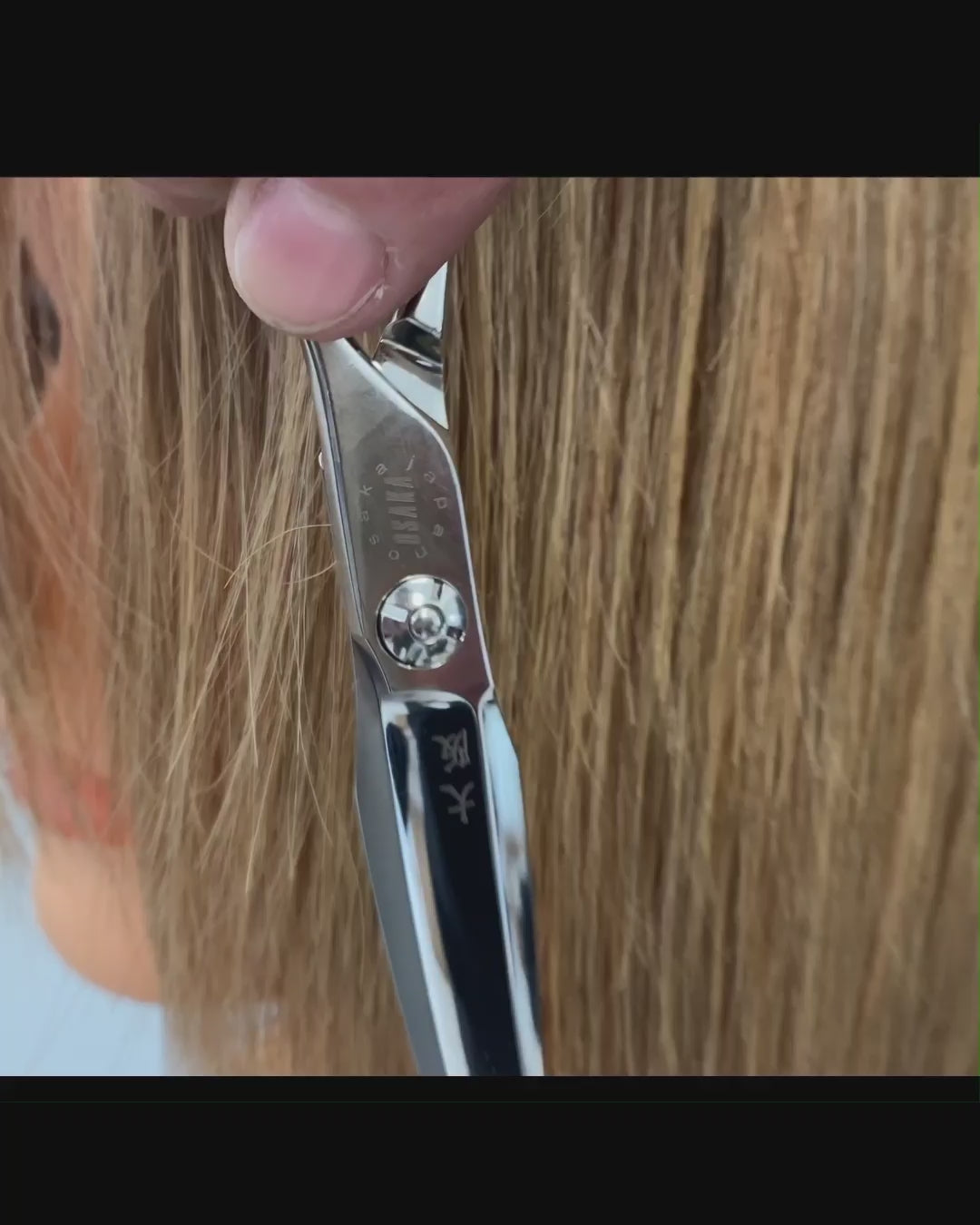


Why Your Scissors Feel Heavy: Solutions for Stylists
There's a point in your career where the hand ache stops being a weekend problem. It starts following you home. Most stylists blame the hours, the back-to-back bookings, the big week. But what if it's not the workload? What if the thing cutting your career short has been in your hand the whole time? The scissors that feel fine at 9 am can quietly become the reason a promising career gets cut short. It's a conversation the industry doesn't have nearly enough.
The Real Reason Your Hand Gives Out Before Your Shift Does
It's not the number of clients. It's not even how long you've been on your feet.
The real issue is how weight is distributed in the tool you're gripping hundreds of times a day. Most stylists assume a lighter pair of scissors will fix the fatigue. So they buy lighter. The fatigue comes back anyway. Here's why: a 1979 study published in Science by Kreifeldt and Chuang explored something called the moment of inertia — how the distribution of mass in a hand-held object affects how it feels to use. Human sensitivity to mass distribution produces Weber fractions roughly ten times greater than sensitivity to lifted weight alone. In plain English, the hand is far more attuned to where weight sits than to how much the tool actually weighs.
Two scissors with identical weights can feel completely different in use. One sits balanced near the pivot point. The other carries its mass toward the tip, and the hand compensates with every snip. Subtle — but the muscles in the wrist and forearm absolutely register it across an eight-hour shift.
Switching to lightweight hairdressing scissors matters, yes. But balance matters just as much.
Why Most Scissors Feel Heavier Than They Should
Poor Balance and the Centre of Gravity Trap
Standard scissors, especially lower-priced ones, are often manufactured without much thought given to where the centre of gravity sits. If that point falls too far forward toward the blades, the hand works harder to keep the tool stable on every cut. Small mechanical flaw. Compounding physical cost.
Think of it like holding a hammer by the very end of the handle versus near the head. Same hammer. Completely different experience.
Handle Design That Works Against You
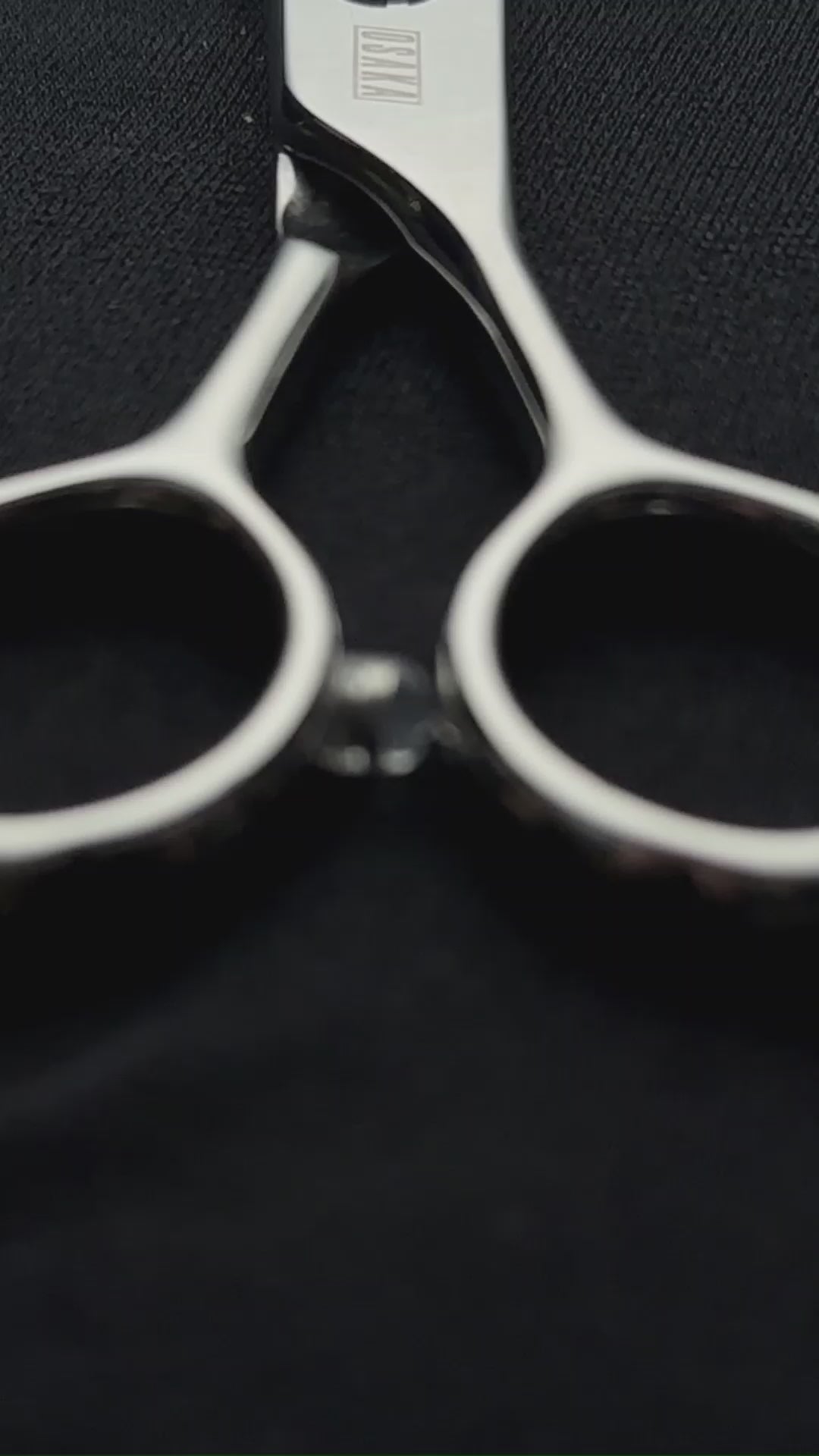
Most traditional scissors use a symmetrical handle — both finger loops in roughly the same plane. This forces the wrist into a slightly elevated, rotated position to achieve a clean cutting angle. Hold that for a few minutes, and it's fine. Hold it across a full day of back-to-back clients, and it becomes a genuine strain pattern. Offset and crane-style handles shift the thumb loop forward, letting the elbow drop and the wrist stay closer to neutral. It sounds like a small design change. For the hand and shoulder, it's a significant one.
Your Wrists Have Been Sending You a Warning (Here Are The Facts)
Wrist strain in hairdressing gets written off constantly. And it’s usually along the lines of "I just need to stretch more."
Occupational health guidelines are pretty clear on this. Any tool that forces your wrist into awkward flexion or deviation isn't just uncomfortable — it's a documented risk factor for musculoskeletal disorders. Their guiding principle (bend the tool, not the wrist) isn't just a catchphrase. It's a design standard that the majority of traditional scissors don't meet.
The CCOHS guidelines also note that blunt or poorly maintained cutting tools can increase the physical effort required to use them by a factor of ten. Not ten per cent. Ten times. For salon owners, especially, this matters beyond personal comfort—poorly designed or neglected scissors aren't just a performance issue. They're a workplace safety issue.
What Professionals Actually Use
Lightweight, Precision-Balanced Scissors
Stylists who've worked through hand injuries tend to land on the same answer. Weight is part of it, sure. But balance is what actually saves your hand over a full day of cuts. Good Japanese steel lets the blade stay thin and light without losing its edge—and that's what you want going into hour six. For a professional cutting ten-plus heads a day, that difference compounds fast.
The Advantage of Ergonomic Offset Handles
Offset handles are the other half of the equation. By repositioning the thumb loop forward, they allow the arm to sit lower and the wrist to stay near neutral throughout the cutting motion. Less deviation. Less static load on the forearm. Less of that deep ache that builds through the afternoon.
Lightweight hairdressing scissors with an offset handle design aren't a luxury upgrade, but are fast becoming a professional standard that the body actually needs for a long career.
The Only Haircutting Scissors Built for Professionals Who Demand More
Explore the Full Range of Scissors and Accessories
Founded in partnership with PASSION Scissors, a globally recognised leader with over 30 years of Japanese steel craftsmanship expertise, OSAKA brings that same precision to the Australian hairdressing community. The range covers every level of professional need:
-
Entry and Professional Collection: Hitachi 440C Japanese steel, built for stylists stepping up without stretching the budget
-
Premium Collection: Top-tier scissors engineered for professionals who demand the sharpest cut, every time
-
Value Packs: Curated scissor sets that offer serious value for those building out a professional kit
- Clearance: Quality OSAKA scissors at reduced prices — worth checking regularly
Why Dull Blades Don't Just Ruin Cuts But Wreck Your Hands As Well
There's a temptation to put off sharpening. The scissors still cut. Clients haven't complained. She'll be right — for now.
But dull blades demand more force with every snip, crushing and folding hair rather than slicing cleanly. A neglected blade accelerates the strain patterns that build into chronic injury. OSAKA's professional sharpening service exists for exactly this reason—keeping the blade sharp isn't just about cut quality. It's about protecting the hand while using it.
The Scissors You're Using Right Now Are Either Building Your Career (Or Ending It)
Here's the part that should matter most. A scoping review published in the Journal of Occupational Medicine and Toxicology, drawing on 44 studies from thousands of hairdressers worldwide, found that musculoskeletal disorders are the single most common reason hairdressers leave the profession. Prevalence figures ranged from 13 to 76% for lower back pain, 9 to 58% for neck, and 11 to 53% for hand and wrist—all significantly higher than other occupational groups. More than half reported symptoms beginning within their first five years. Tool choice is one of the most direct, actionable things a stylist can change.
Investing in lightweight hairdressing scissors that are properly balanced, ergonomically designed, and forged from premium Japanese steel is one of the smartest career decisions a stylist can make. OSAKA Scissors, backed by PASSION Scissors' 30-year legacy of precision craftsmanship, is where that investment makes the most sense.
Explore the full range of scissors, value packs, and clearance deals here. Your hands have been working hard for you. Time to return the favour.