











Upgrade Your Hair Scissors: When Is It Time to Replace Them?

There's a moment every stylist knows — the one where a cut just doesn't feel right. Maybe the client winces slightly. Maybe the finish looks rough, even after all the cleanup work.
It might not be technique. It might be the tools. Worn-out scissors degrade performance so gradually that the decline barely registers — until suddenly, it absolutely does. Here's what every professional needs to know about recognising when hair scissors have had their day, and what to do before it costs more than a sharpening fee.
Worn-Out Scissors Are Quietly Draining Your Income and Your Body
Dull Blades Don't Just Affect the Cut
Blunt scissors don't just produce subpar results. They actively damage hair. Once the edge starts going, the hair doesn’t get cut cleanly anymore. It gets pressed, bent, and left looking fuzzy at the ends. And clients do notice, sometimes before they’ve even made it back home.
Inconsistent results are a reputation risk. A client who leaves with split ends is far less likely to rebook — and far more likely to quietly switch salons. In a trade built on trust and word of mouth, that's a serious hit.
The Toll on Your Hands and Wrists
Here's the part that doesn't get talked about nearly enough. Dull or poorly balanced scissors make the body work harder to compensate. Every extra squeeze, every awkward angle adjusted to land the cut right, adds up across a full day on the salon floor.
A cross-sectional study published in the Work journal, involving 504 cosmetologists, found that musculoskeletal disorders of the neck and upper limbs affected between 7.7% and 55.8% of participants over a twelve-month period. Over 56% of observed work postures were rated high or very high ergonomic risk, with a median RULA score of 5.0—a threshold signalling an immediate need for intervention. Repetitive hand and finger motions were identified as a core contributing factor. Hairdressing already puts enormous physical demand on the body. Using tools that require extra compensatory force makes that considerably worse.
5 Signs Your Hair Scissors Have Already Passed Their Expiry Date
1. Your Scissors Are Pulling Instead of Cutting
If your scissors are catching or pulling through the hair, something’s off. They should cut cleanly, not fight you for every section. And once you feel that resistance, it’s usually time.
2. You Notice Visible Damage — Chips, Rust, or Bent Blades
Nicks, chips, or rust spots aren't cosmetic issues. There are structural problems affecting every cut. A bent blade is essentially a write-off — no amount of sharpening corrects misaligned steel.
3. The Tension Keeps Loosening No Matter How Many Times You Adjust It
Tension that won't hold signals wear in the pivot mechanism. Adjusting it daily is a red flag. Scissors should hold tension reliably between proper maintenance sessions, and anything less means the internal components are past their useful life.
4. You're Sharpening More Than Twice a Year
A quality pair used daily should need sharpening once or twice a year. If they're being sent off more frequently and still underperforming between services, the steel itself is likely compromised.
5. Cutting Feels Uncomfortable or Tiring
Fatigue during cutting isn't just a long-day problem. When scissors no longer fit the hand properly (that is, through handle wear, imbalance, or poor ergonomic design), muscles and tendons overcompensate. Over time, that matters enormously.
Research published in Acta Neurologica Belgica surveyed 800 hairdressers and found approximately 3.7% showed signs of task-specific focal dystonia—a neurological movement disorder from long-term repetitive scissor use, marked by progressive loss of voluntary motor control. The authors noted that cases are likely under-reported due to job security concerns. Persistent hand discomfort isn't something to push through. It's a signal worth taking seriously.
Can a Sharpen Fix It? Or Is That Just Delaying the Inevitable?
Sharpening is genuinely valuable maintenance and absolutely extends the working life of a good pair of scissors. Quality steel responds well to professional sharpening and can return to near-original performance. Worth doing regularly, no question.
But sharpening has limits. It restores an edge. It cannot fix a bent blade, repair a damaged pivot, or reverse the micro-fracturing that happens in lower-grade steel after years of heavy use. If scissors are being sharpened frequently and still underperforming between services, sharpening isn't solving the problem — it's postponing a necessary conversation about replacement.
Get this call right, and you’ll usually spend less in the long run. Because once scissors are truly worn out, paying for sharpening again and again just stops making sense.
What Separates a Good Upgrade From One You'll Regret in 6 Months
Japanese Steel vs. Standard Grade — Does It Matter?
Honestly? Yes. Significantly. With premium Japanese steel, like Hitachi 440C or cobalt blends, the edge tends to last properly through the daily grind of salon work. And when you’re on the tools every day, you kinda notice it fast, don’t you, when cheaper steel starts going off sooner than it should. The difference becomes obvious after six months of real salon work.
Ergonomic Handles: A Game-Changer for Long Salon Days
This is where stylists often make the mistake of shopping with their eyes rather than their hands. A pair might look sleek, but appearances don't predict comfort.
Research published in the Work journal examined comfort perception specifically in bypass-type cutting tools—the same mechanical category as professional hairdressing scissors. The study found tool aesthetics had no meaningful relationship to comfort. What actually determines whether a tool feels right comes down to functional and physical fit: handle geometry, weight distribution, and how the design accommodates natural wrist positioning under repeated use. Fit and balance are everything.
Why Serious Australian Stylists Don't Settle When It's Time to Upgrade
Precision-Crafted for Professional Use
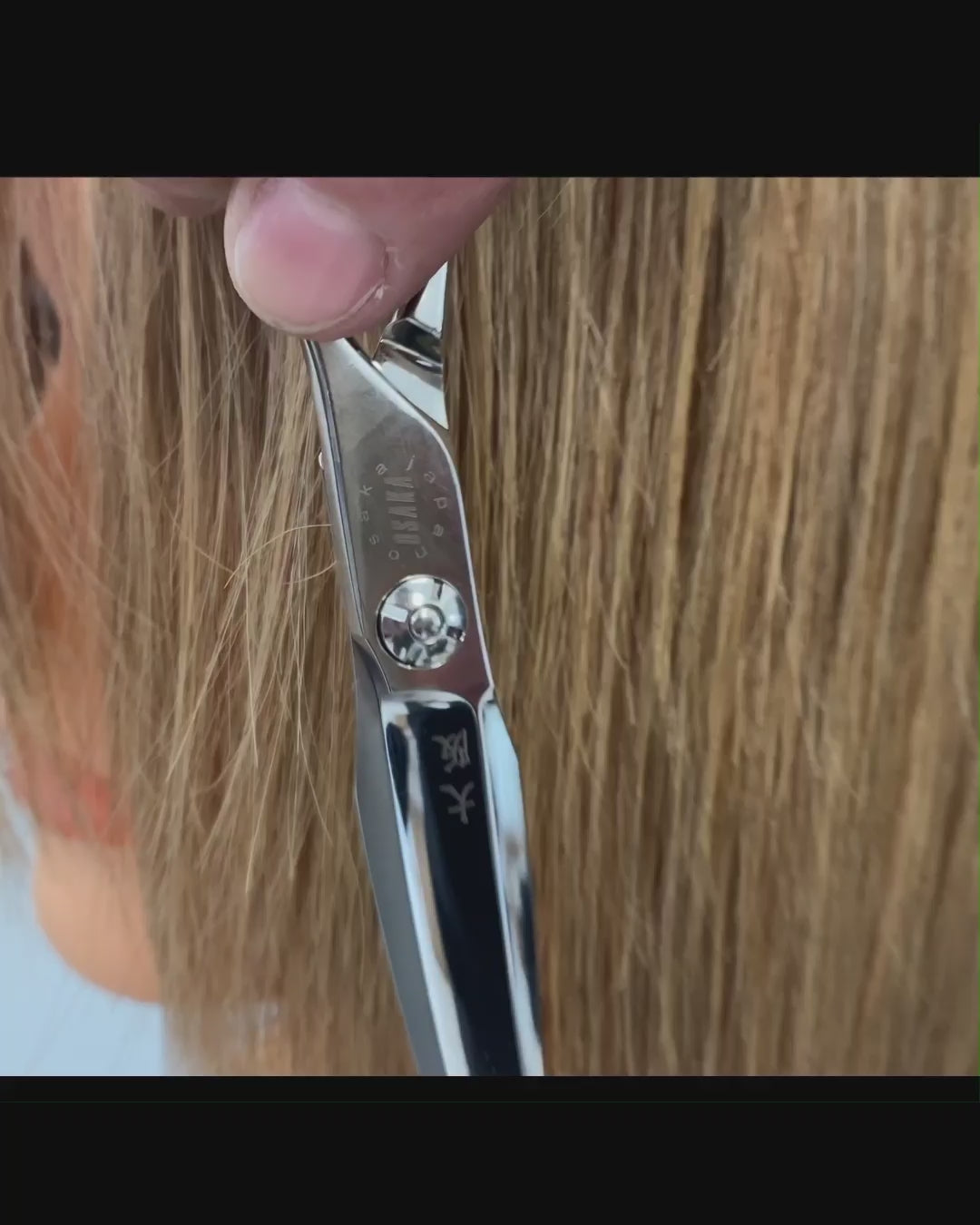
At OSAKA Scissors, every pair is built from premium Japanese steel—trusted by professional stylists across Australia and the UK for decades. Whether after a precision cutting scissor, a complete set, or a specialist blade for barbering work, the full scissors range and scissor sets are worth a proper look. There's also genuine value in the clearance collection for those watching the budget without wanting to compromise on quality.
Sharpening Services That Extend the Life of Your Scissors
OSAKA offers a professional sharpening service. Why? Even the best scissors need proper maintenance. It's part of the ownership experience, not an afterthought.
Accessories Built Around the Modern Stylist
From pouches to salon accessories, the range feels properly made for people who use their tools all day. And honestly, that matters, because in a busy salon, gear has gotta work hard without fuss.
Your Next Cut Starts With the Right Tool
We’ve seen firsthand what the right pair of hair scissors does for confidence on the floor. When the tool performs, the stylist performs—full stop. If any of the signs above felt uncomfortably familiar, that's worth paying attention to.
Take a look through the OSAKA Scissors range and see what actually suits the way you work. Whether you’re replacing one tired pair or putting together a proper kit, these are tools made for stylists who want clean results, lasting comfort, and gear that simply holds up.