









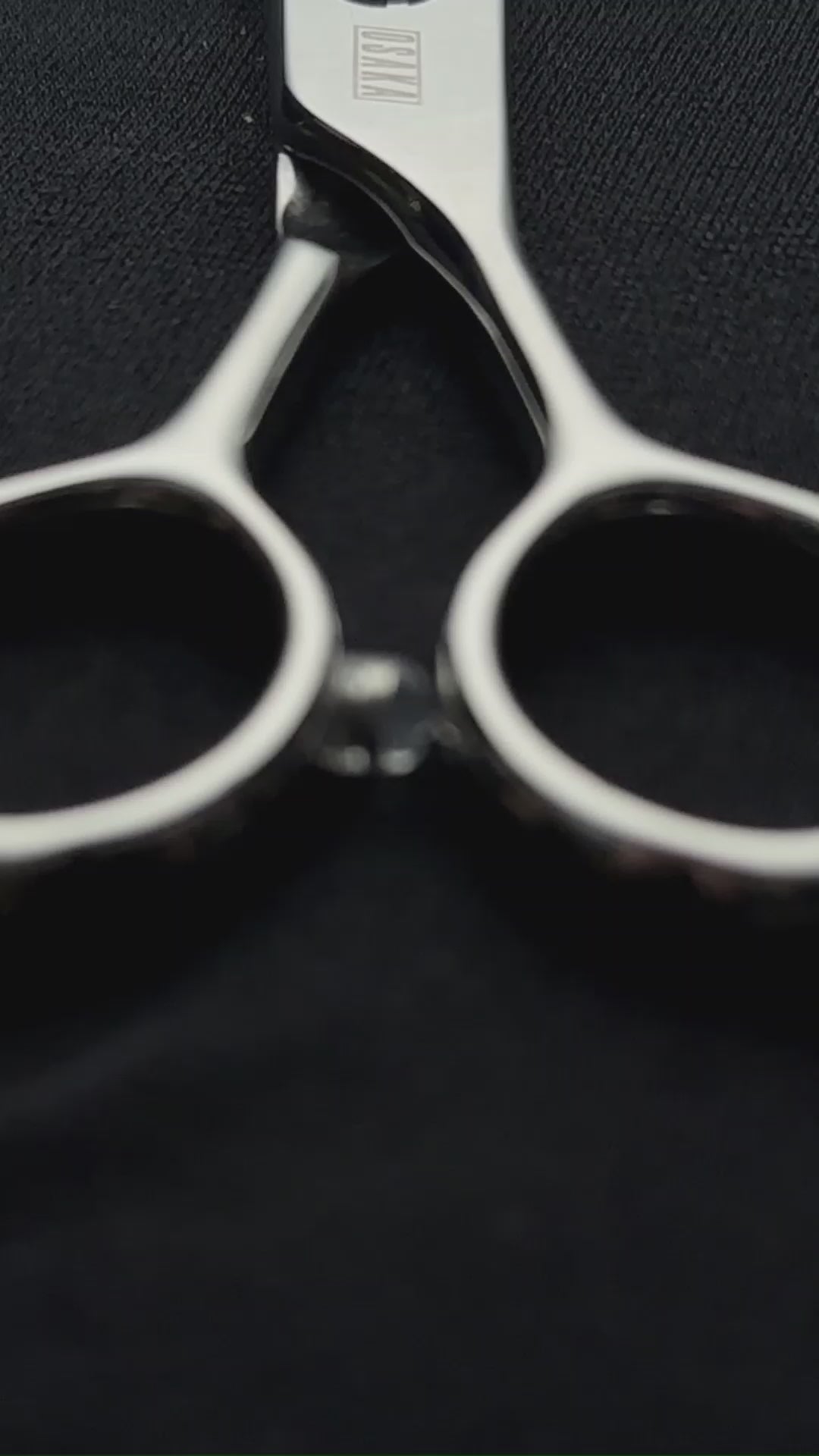

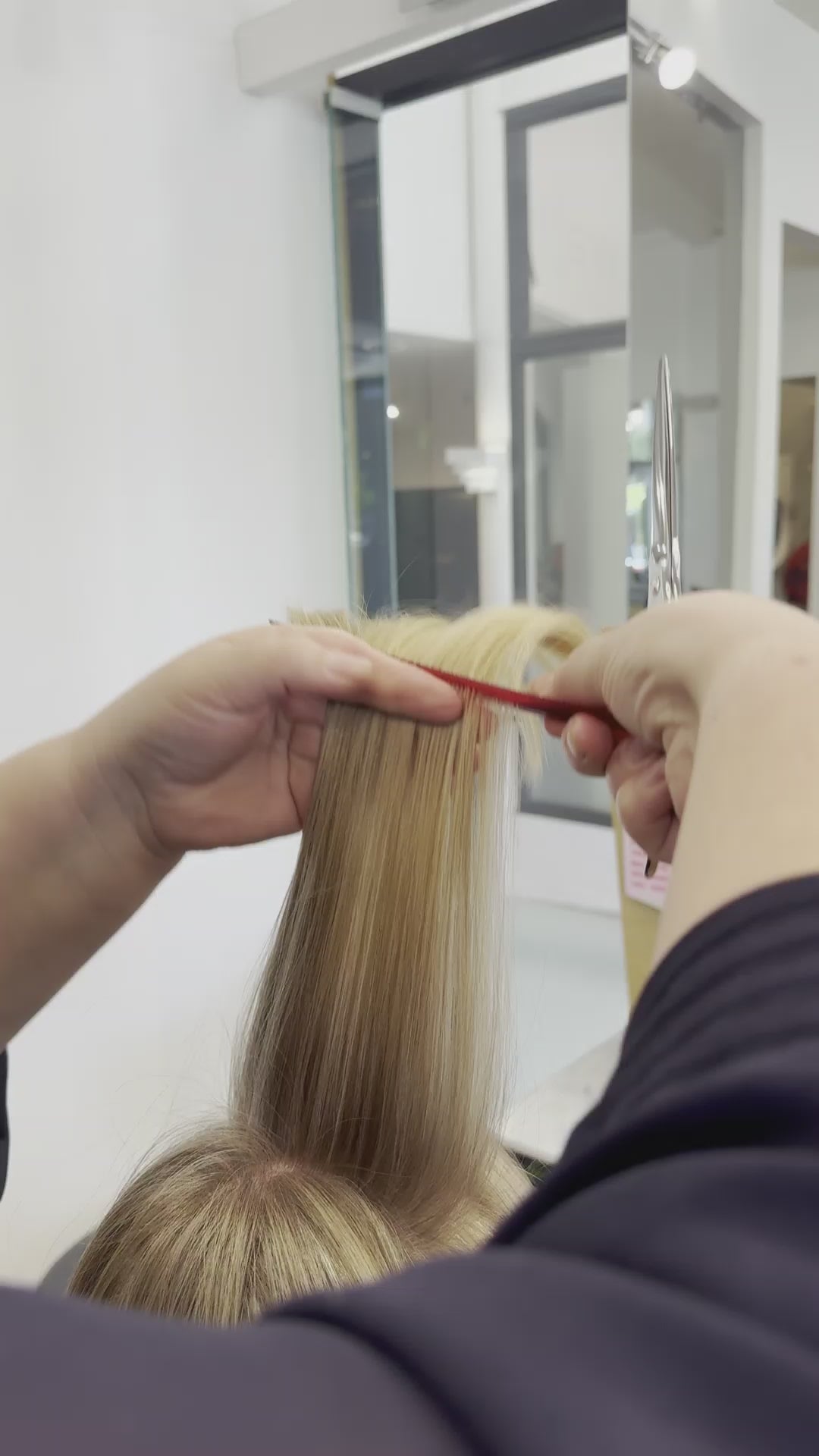

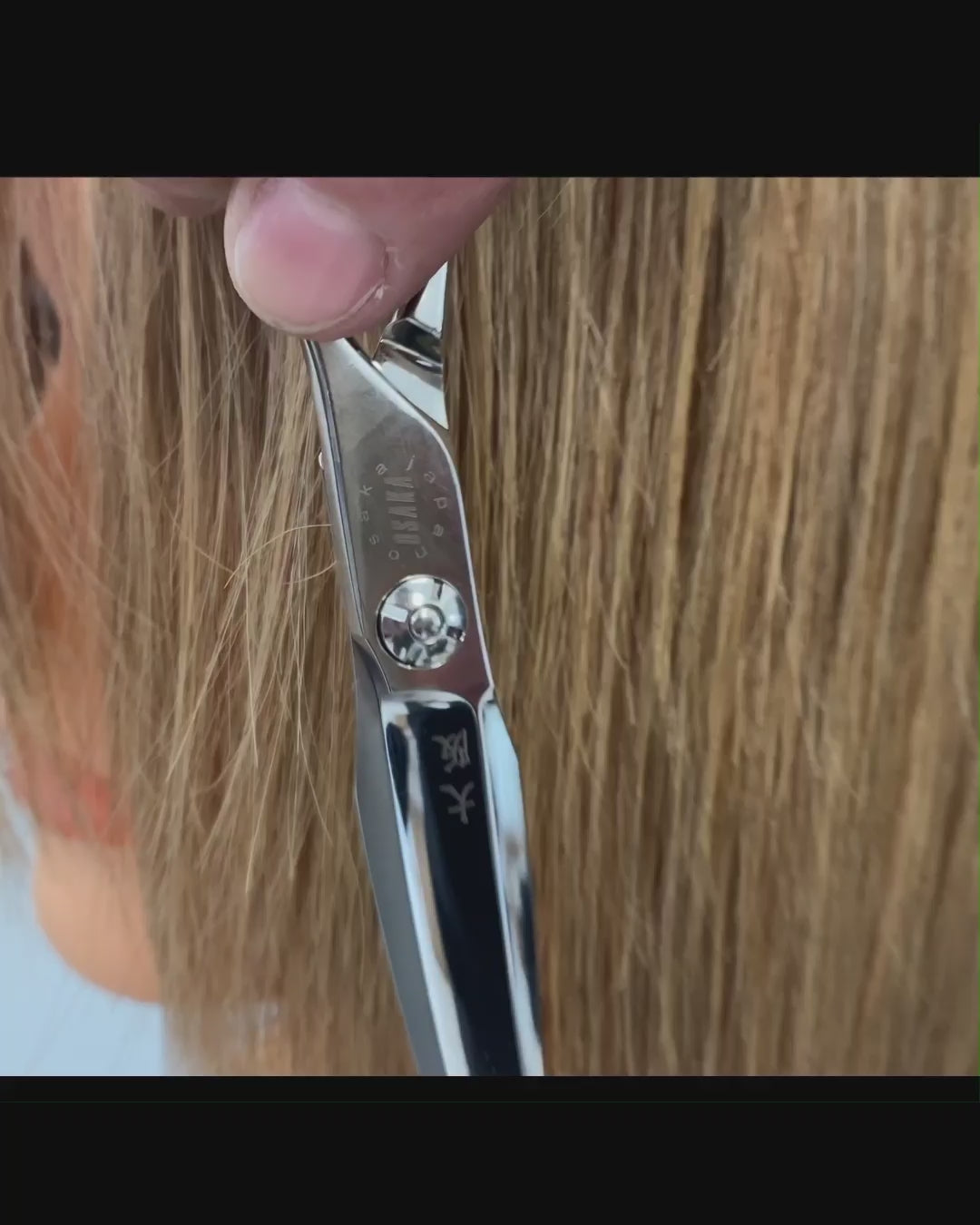


Why Japanese Convex Edge Scissors Cut Hair More Smoothly
These scissors have become a standard in professional hairdressing — not because of branding, but because the geometry is fundamentally different from what most stylists start with.
The edge profile, the steel, and the grinding method all work together to reduce drag and produce cleaner results. Understanding why that happens makes it easier to justify the investment.
- Convex edges use a sharper, more refined cutting angle
- The curved blade design reduces friction against the hair
- Hair bends less before being cut, creating cleaner lines
- Japanese steel allows thinner, longer-lasting, sharper edges
- Popular for slide cutting, texturising, and precision work
What Are Convex Edge Scissors?
This blade type is defined by specific geometry rooted in traditional Japanese blade-making. Widely used in high-end salons, the cutting feel is noticeably different from cheaper alternatives.
What Makes a Convex Edge Different From a Bevel Edge?
A bevel edge presents more blade surface to the hair during the cut. The strand is pressed slightly before separation occurs, which is why many stylists notice a firmer cutting feel compared with convex-edge designs.
This is what causes split ends, ragged texture, and the faint drag during slide cutting.
A convex edge features a curved grind that helps hair separate cleanly instead of being compressed. This design creates a smoother slicing action, reducing drag and minimising unnecessary stress on the hair strand.
Convex Edge vs Bevel Edge
-
Sharpness: Convex blades are refined to a slimmer cutting angle, while bevel edges prioritise durability with a more substantial edge profile
-
Cutting smoothness: Convex edges glide through the hair with less resistance, whereas bevel edges tend to create more contact before the strand separates
-
Friction levels: The curved face of a convex edge reduces contact drag; flat bevel geometry increases it
-
Maintenance: Convex edges require professional sharpening to preserve the curve; bevel edges are more forgiving with general sharpening tools
- Best use cases: Convex edges suit slide cutting, precision work, and texturising; bevel edges work for general-purpose or high-volume rough cutting
Why Japanese Scissors Often Use Convex Edges
The convex edge geometry — known as hamaguri-ba or "clam-shell edge" — originated in Japanese katana craftsmanship. Applying it to scissors requires premium-grade steel and hand-finishing that machine production can't replicate.
That combination of material and precision is why these tools sit at the top end of the professional market.
Why Do Japanese Convex Edge Scissors Cut Hair More Smoothly?
The smoother cutting feel isn't a marketing claim — it's a mechanical outcome. Several things happen at the blade level that reduce resistance and improve the quality of every cut.
How Reduced Friction Improves Cutting Performance
In tribological terms — the science of friction, wear, and surface interaction — a smoother blade surface reduces drag that causes pulling and uneven separation.
The curved face of a convex edge limits the surface area contacting the hair strand, allowing the blade to glide rather than push. Stylists working long sessions notice this as less hand load during repetitive cuts.
Why Sharper Edge Angles Matter
A lower edge angle creates a thinner, sharper cutting surface that requires less force to cut cleanly.
According to established sharpening science, higher angles produce a more durable but blunter edge — which is why convex-ground scissors produce a noticeably lighter feel than standard bevel-edge scissors.
How Convex Edges Improve Advanced Cutting Techniques
Blade control and consistency matter most during advanced techniques — and that's where the geometry earns its keep.
Techniques That Benefit Most From Convex Edges
-
Slide cutting: The blade needs to glide along the hair shaft without grabbing — convex edges reduce the drag that interrupts this motion
-
Point cutting: Precise tip work requires a sharp, consistent edge that enters hair cleanly without deviation
-
Texturising becomes more controlled when the blade isn't fighting resistance at each snip
- Layering: Cleaner lines between sections improve blend consistency throughout the cut
Scissor-over-comb work benefits from the reduced force needed per cut, allowing faster, more fluid movement
How Convex Edge Scissors Affect Haircut Quality
Better blade geometry translates directly into better results for clients. Most stylists switching from bevel-edge scissors notice the difference within the first session.
Cleaner Lines and Softer Blending
Because convex edges don't compress hair before cutting, the line at the cut is more accurate. That produces more consistent, blunt lines and more natural-looking soft blends.
Reduced Split Ends and Hair Stress
The crushing action of a bevel edge leaves the hair's cuticle partially open — a contributing factor to split ends. Convex edges slice rather than crush, so the cuticle separates more cleanly, and fibre ends are smoother.
Why Stylists Notice More Control During Precision Work
When working on fringes, face-framing sections, or dry detailing, small movements matter. A smoother blade response gives stylists greater confidence when refining shape and balance.
Are Convex Edge Scissors Better for Professional Stylists?
For working professionals, scissors aren't a luxury item — they're a tool that affects quality of work, client experience, and physical health across a full career. The case for convex edges is practical rather than aspirational.
Why Many Salon Professionals Prefer Convex Edges
After a full day of cutting, subtle differences become easier to notice. A blade that moves through the hair more freely can make repetitive technical work feel less demanding.
How Convex Edges May Help Reduce Hand Fatigue
Salon work places constant demands on the hands and wrists. Any reduction in effort during daily cutting can help make long booking schedules feel more manageable.
Good maintenance habits help preserve blade performance and ensure the scissors continue to feel predictable from one service to the next.
Who Benefits Most From Convex Edge Scissors?
Convex-edge scissors are often chosen by:
- Senior stylists who cut high volumes daily and need tools that protect their hands over a long career
- Precision cutters and barbers whose work demands a consistent blade response
- Hairdressing apprentices are ready to move beyond entry-level tools and build their technique properly
- Salon owners are investing in professional kits that reflect their quality standards
What Should You Look for When Buying Convex Edge Scissors?
A closer look at construction and materials makes it easier to separate quality models from the rest of the market. The market includes a wide range of options, and not all of them deliver the same cutting experience.
Important Features to Compare
Steel grade matters most. Japanese alloys in the higher hardness range hold the convex geometry far longer than lower-grade alternatives. Blade length affects technique suitability; shorter blades favour detail work, longer blades suit wet cutting.
Handle ergonomics and a quality tension system also matter. More on handle geometry in this guide to offset hairdressing scissors.
Signs of High-Quality Convex Edge Scissors
Premium models tend to share a few consistent features worth looking for.
- Hollow-ground blades that further reduce the blade-to-hair contact surface
- Hand-finished edges, maintained to tolerances that machine grinding can't replicate
- Ball-bearing or adjustable tension systems that allow precise calibration per stylist
- Lightweight, balanced construction that minimises grip load during extended sessions
Why Cheap Convex Edge Scissors Often Perform Differently
Lower-grade steel can't hold the convex geometry long — the smoother cutting feel disappears within months. Machine-ground "convex" edges on budget models behave more like bevel edges in practice.
The same principles in this guide to offset hairdressing scissors apply when comparing convex-edge models.
Why Australian Stylists Are Investing More in Convex Edge Scissors
Australian salon culture has shifted toward more technical, precision-driven cutting and colouring. That shift has increased demand for tools that match the standard of the work being produced.
Growing Demand for Precision Cutting Tools in Australian Salons
Advanced blending and graduation rely on precise scissor control. As client expectations continue to rise, stylists need tools that help deliver cleaner, more refined results without sacrificing efficiency.
Why Tool Quality Matters in Busy Salon Environments
In a full-time salon setting, durability, edge retention, and ergonomic comfort aren't premium considerations — they're operational requirements. Tools that fatigue faster introduce cumulative strain that affects work quality toward the end of a long day.
What Australian Buyers Often Prioritise
Experienced stylists often judge value over years rather than months. A well-maintained pair can remain dependable long after several budget alternatives have been replaced.
Browse the professional range to compare different steel grades, handle styles, and cutting configurations. You can also check our premium scissors sets and get the most out of your investment.
Frequently Asked Questions About Convex Edge Scissors
If you're still weighing up your options, these are some of the questions stylists ask most frequently.
Are convex-edge scissors worth it?
For stylists who spend hours cutting every day, the difference is often noticeable from the first few services. Greater control and a smoother cutting action are common reasons they remain a popular upgrade.
Do convex edge scissors stay sharp longer?
Premium Japanese steel holds the edge well with proper care. Because the grind is finer, Osaka's scissor sharpening service is the right option when maintenance is due.
Are convex-edge scissors good for beginners?
They can be a strong starting point for students learning precision work. The sharper edge takes some adjustment, but building technique on quality tools pays off.
What is the difference between convex and bevel-edge scissors?
A convex edge is curved and designed for smooth slicing with minimal compression. A bevel edge is flat-ground — more durable, but creates more resistance during cutting.
Why are Japanese scissors considered premium?
Japanese scissors have earned their standing through careful craftsmanship, specialised steel selection, and a long tradition of precision toolmaking. The sharpness and balance are difficult to replicate at lower price points.
Discover Professional Scissors at Osaka Scissors
Professional cutting tools influence everything from precision to comfort across a busy workday. Osaka Scissors focuses on designs that support reliable performance, balanced handling, and lasting usability.
Explore our complete scissors collection, compare professional sets, or browse accessories that help keep your tools performing at their best.