









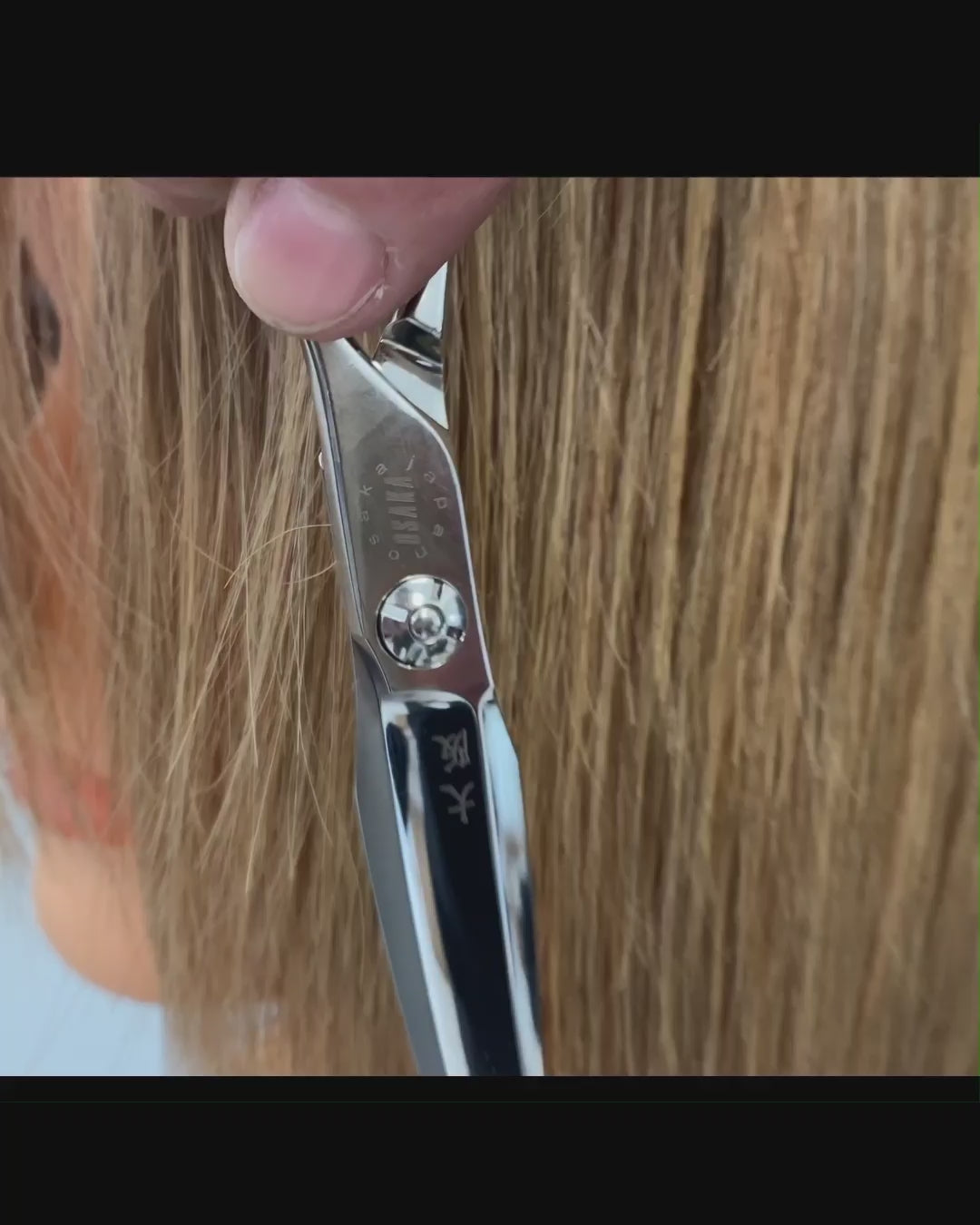


Best Offset Hairdressing Scissors for Stylists & Barbers

Offset hairdressing scissors are the preferred choice for professionals who cut all day, because the angled handle keeps the wrist neutral and reduces cumulative strain. The offset design drops the ring finger lower than the thumb — easing tension across the elbow and shoulder through a full shift. This guide covers:
- What offset scissors are and how they differ from other handle styles
- How a handle design directly affects long-term joint health
- Key features to evaluate before buying in Australia
- How the tool serves hairdressers and barbers differently
- Where to find quality offset scissors at every career stage
What Are Offset Hairdressing Scissors?
Handle design is one of the most overlooked factors in scissor buying — and one of the most consequential. This section covers what offset means, how it compares to other styles, and why the angle matters beyond comfort.
The Anatomy of an Offset Handle
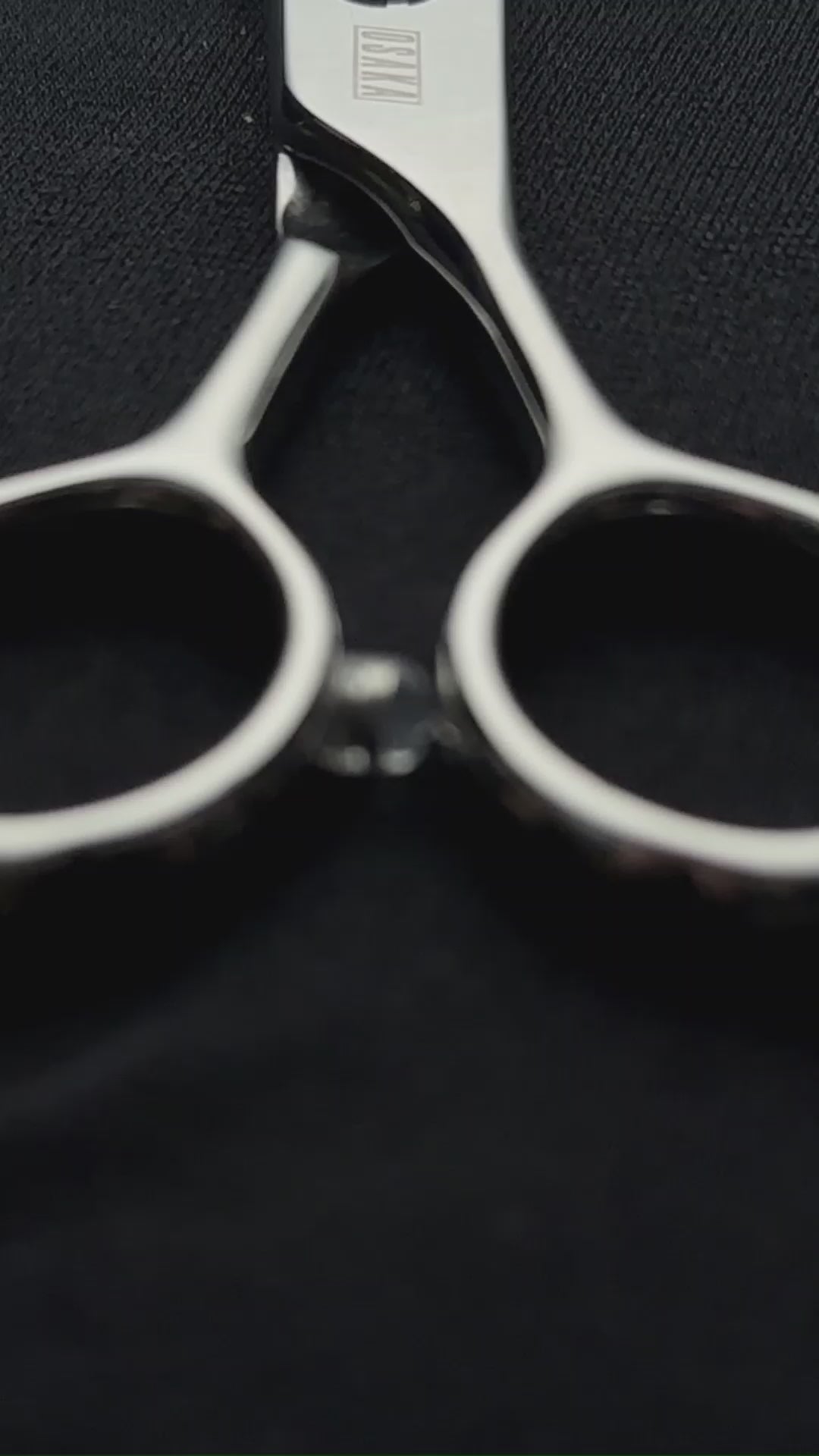
An offset handle places the thumb hole shorter than the ring finger hole. That asymmetry lets the cutting arm sit lower, the elbow drop, and the shoulder stop compensating on every snip. Most professionals find the position immediately natural.
Offset vs. Crane vs. Even Handle — What Actually Changes?
Even handles force the arm higher and more rotated. Crane handles drop the ring finger further, allowing a near-flat wrist. Offset sits between the two — enough angle to reduce strain, without the adjustment period a crane handle demands.
Why the Handle Angle Is More Than a Comfort Feature
The hand, wrist, elbow, and shoulder work as a chain. Force one joint into an awkward angle, and the others compensate. An even handle tilts the forearm inward; an offset handle reduces that tilt — a difference that compounds over a career.
Why Offset Scissors Are the Ergonomic Standard for Working Professionals
The ergonomic case for offset scissors is backed by occupational health research, not marketing copy.
What Happens to Your Body After Years of Scissor Work
A scoping review of 44 studies found hairdressers most commonly report lower back, neck, shoulder, and hand and wrist strain, with shoulder complaints affecting 28 to 60 per cent surveyed.
On this account, hairdressers also faced a greater risk of leaving the profession for health reasons than most occupational groups.
Repetitive Strain, Dystonia, and the Tools That Make It Worse
Task-specific focal dystonia causes involuntary muscle contractions in the cutting hand — and can end a career once established.
Research links the onset to prolonged repetitive scissor use, where grip force and wrist deviation are high. Poorly fitted tools are a documented contributing factor.
How Handle Shape Changes the Way Your Body Works
Research into handle geometry shows that angle, grip diameter, and load distribution measurably affect posture and discomfort during repetitive hand tasks. Tools shaped around the hand's natural resting position reduce awkward joint angles and grip effort.
An offset handle delivers a different mechanical input to the arm, shoulder, and neck.
What to Look for When Buying Offset Hairdressing Scissors in Australia
Steel grade, blade length, edge type, tension system, and handle all affect long-term performance.
Blade Steel — What the Grade Actually Tells You
Japanese steel is the industry benchmark. Premium grades such as Hitachi ATS-314 and VG-10 cobalt hold an edge the longest. Hitachi 440C suits professionals who sharpen regularly. A dull blade increases grip force and accelerates fatigue.
Blade Length and Why It Should Match Your Dominant Cutting Technique
Blades of 5 to 5.5 inches suit detail and precision work. Six inches and above suit blunt cutting and bulk removal. Barbers tend to favour shorter hair; hairdressers often carry both. Choosing by appearance rather than technique is a costly mistake.
Convex vs. Semi-Convex Edges — Matching the Blade to the Cut
A convex edge is finer — the standard for slide cutting and slicing. A semi-convex edge handles blunt cutting with less maintenance. The right choice depends on technique and consistency of care.
Tension Systems, Screw Types, and Why They Matter Long-Term
Loose tension folds hair; too-tight tension tires the hand. A quality adjustable screw lets the professional set the right resistance. Passion Osaka's sharpening service keeps scissors at the performance level they were built for.
Handle Fit, Finger Rest Placement, and the Test-Hold Rule
A finger rest — or tang — stabilises the cut and can be removable. Test-hold rule: pick up the scissors, take a natural cutting stance, and check the wrist. If the arm rotates or the elbow lifts, the handle does not fit.
Offset Scissors for Hairdressers vs. Barbers — Same Tool, Different Demands
Both professions benefit from an offset handle, but daily demands on the tool differ considerably.
What Hairdressers Need — Blunt Cutting, Slicing, and Slide Techniques
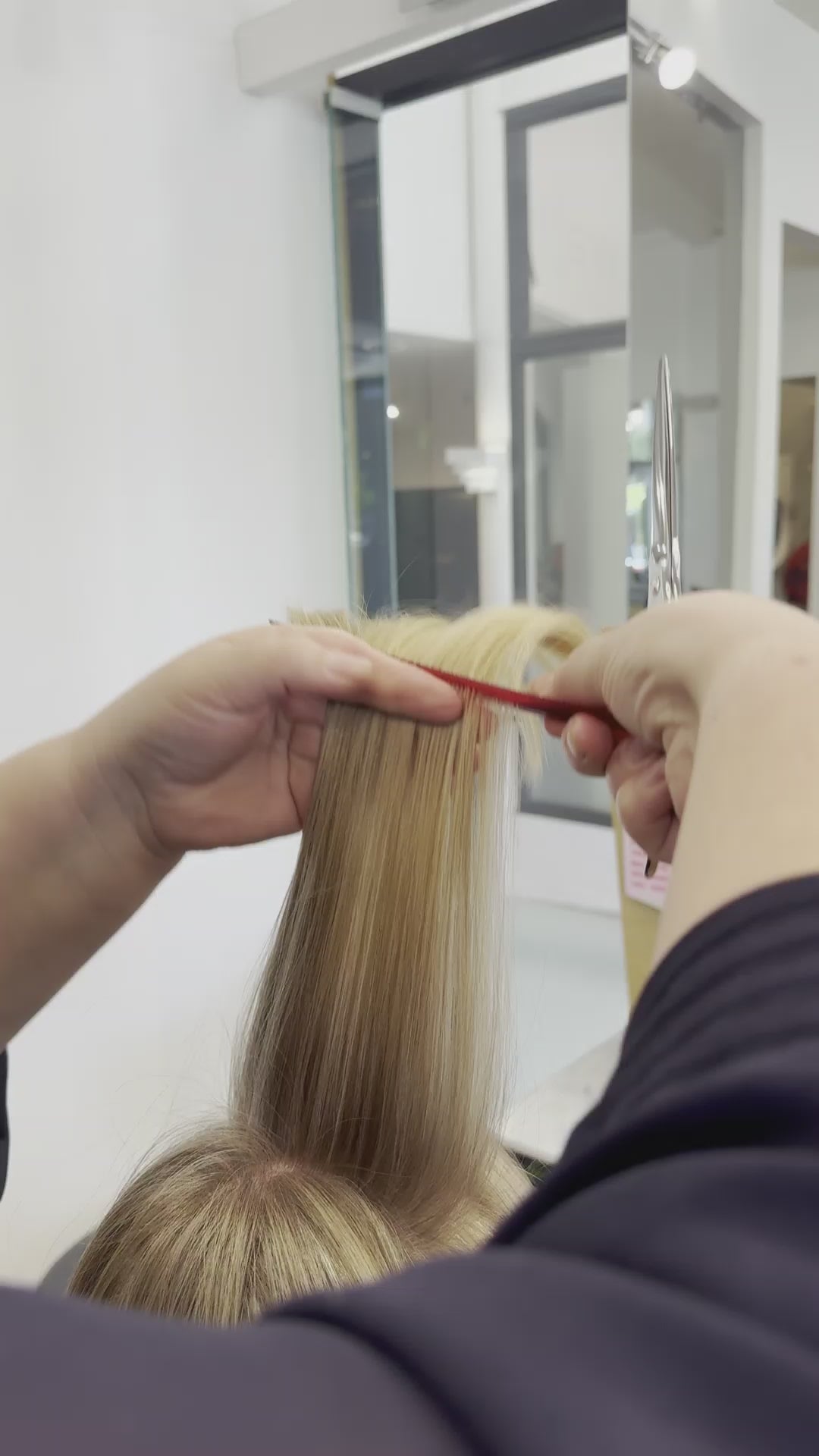
Hairdressers cycle through blunt cutting, slicing, and slide work in a single shift. A convex edge handles slicing with less drag; a balanced blade length supports blunt cutting.
Many carry two pairs — one convex for texture, one semi-convex for general cutting.
What Barbers Need — Scissor-Over-Comb, Point Cutting, and Detail Work
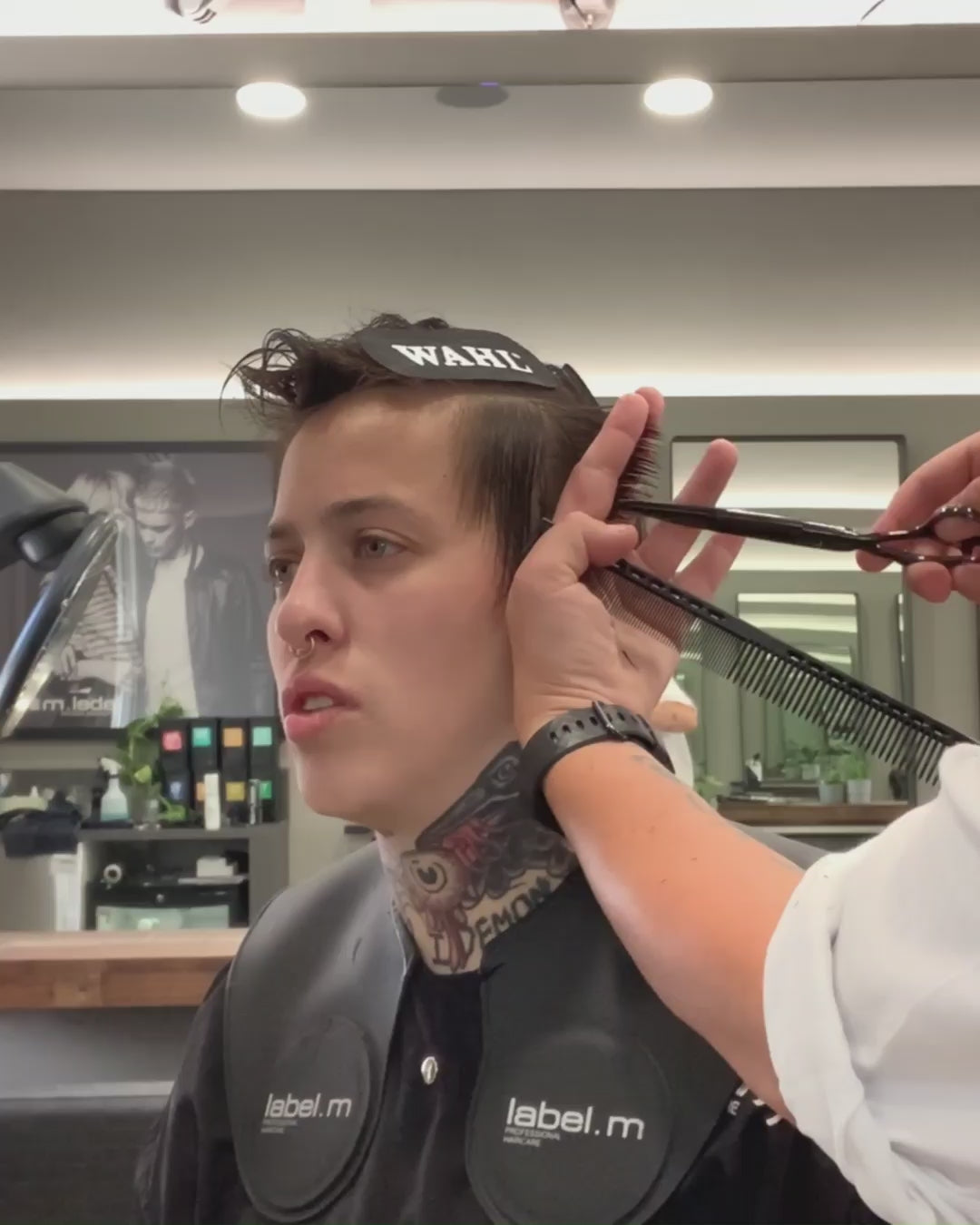
Scissor-over-comb demands fast, controlled motion with blades partially open — loading the thumb joint.
Point cutting near hairlines needs a short, responsive blade. Barbers generally favour a shorter, lighter pair with tight tension for speed and repositioning.
Where the Two Overlap — and What That Means for Your Kit
Both professions need an ergonomic handle, quality steel, and adjustable tension. For professionals who move between disciplines, a 5.5-inch convex-edge offset pair covers most of the work.
The Passion Osaka guide to barber vs. hairdresser tools covers how the two kits compare.
How to Care for Your Offset Scissors and Make Them Last
Most habits that protect the blade and pivot take under two minutes a day.
Daily Cleaning and Oiling — the Routine That Protects Your Investment
Hair, product residue, and moisture degrade blades over time. Wiping after every few clients prevents build-up; one drop of oil on the screw each day prevents corrosion. The full routine is in the Passion Osaka daily scissor care guide.
When and How Often to Get Your Scissors Professionally Sharpened
Full-time professionals should sharpen every six to twelve months. The signals: increasing grip force, hair folding rather than cutting, slide techniques, and dragging. Passion Osaka's professional sharpening service is available across Australia.
H3: Storage, Transport, and the Small Habits That Extend Scissor Life
Scissors loose in a kit bag are scissors heading for damage. A dedicated pouch protects blade tips and prevents contact with other metal tools. Closing the blades fully before storing reduces pivot stress over time.

Finding the Right Offset Scissors at Every Stage of Your Career
Quality offset scissors exist across a range of price points — knowing what to prioritise prevents the wrong purchase at the wrong time.
Apprentices and Students — What to Prioritise When the Budget Is Tight
Durability and handle fit matter more than premium steel at the training stage. A mid-range Japanese steel offset pair teaches correct technique without the risk of damaging an expensive pair.
Our Passion Osaka clearance collection has solid entry-level options.
Working Stylists and Barbers — Upgrading to Professional-Grade Scissors
Professionals cutting five or more days a week need premium steel and a refined handle fit — edge quality and ergonomics directly affect daily fatigue and injury risk at that volume.
Here’s the full Passion Osaka scissors collection for pairs matched to cutting style and hand size.
Salon Owners Kitting Out a Team — Why Sets Make More Sense
Sets pair a straight scissor with a thinner or second blade length, covering most techniques in one purchase. They simplify sharpening schedules and reduce costs across a team.
Check out our Passion Osaka scissor sets collection, which is built with salon teams in mind.
Frequently Asked Questions About Offset Hairdressing Scissors
These are the questions professionals and students ask most when researching offset hairdressing scissors
What makes offset hairdressing scissors better for professionals?
The offset handle keeps the wrist neutral, reducing load on the elbow and shoulder over a full working career.
Are offset scissors suitable for both hairdressers and barbers?
Yes — ergonomic benefits apply to both, with blade length and edge type varying by technique.
What size offset scissors should I buy?
Five to 5.5 inches for precision; six inches and above for blunt cutting and bulk removal.
How long should a quality pair of offset scissors last?
With regular oiling, correct storage, and professional sharpening, a decade or more.
How do I maintain my offset hairdressing scissors?
Daily wiping and oiling, dedicated pouch storage, and professional sharpening every six to twelve months.
Are quality offset scissors worth the investment for apprentices?
A mid-range pair with the correct handle fit builds correct technique and lasts through training.
Where can I buy professional offset hairdressing scissors in Australia?
Passion Osaka supplies professional-grade scissors across Australia.
Get Your Best Offset Scissors Here
The right pair of offset scissors changes how you work — and how long you can keep doing it.
Explore our Passion Osaka scissors collection for pairs matched to your hand, technique, and career stage. Browse the full Passion Osaka range to find individual pairs and full salon sets.