









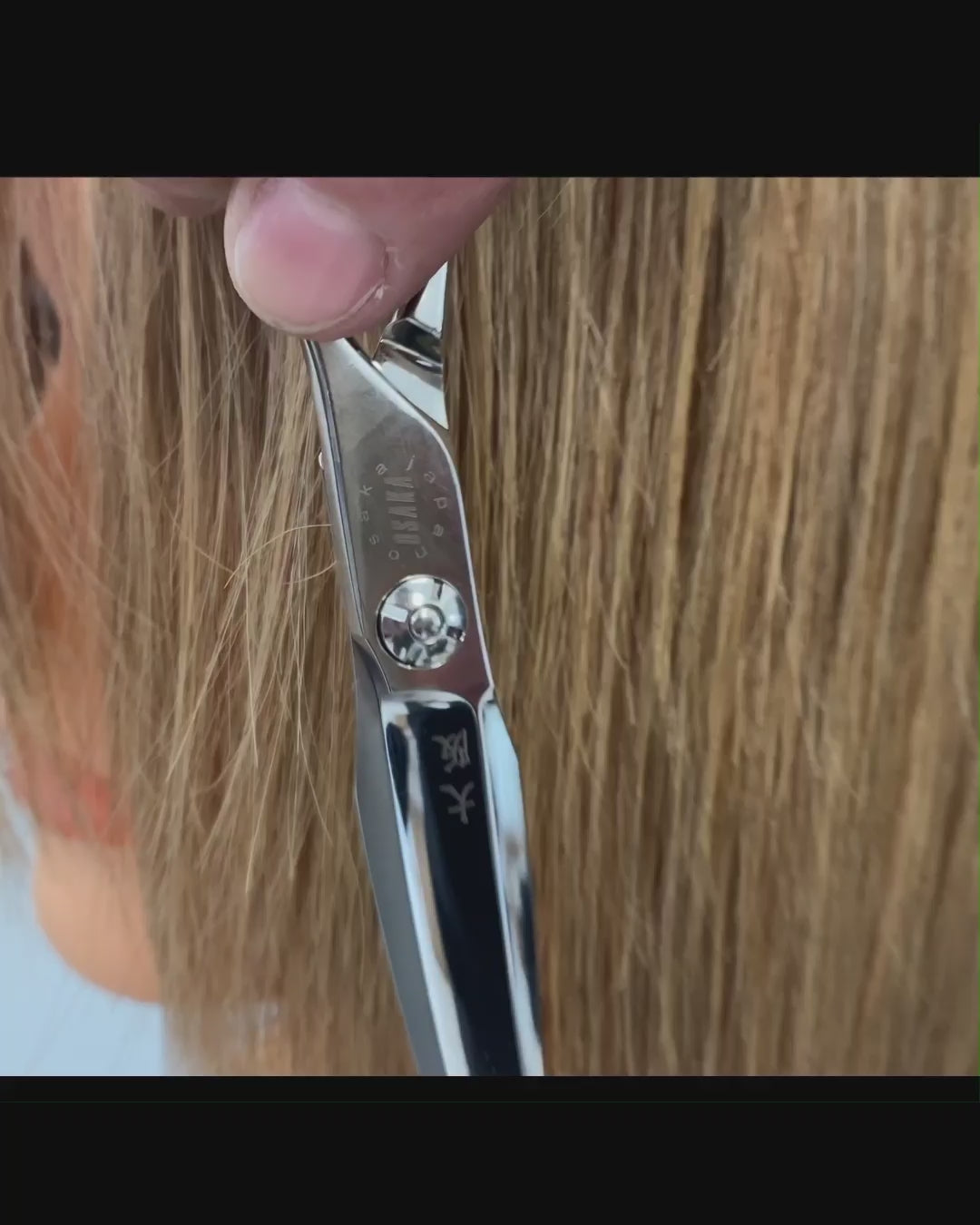


Barber vs Hairdresser Tools: What Should Be Different?
Barber vs hairdresser tool kits may share a surface resemblance, but the function behind each is quite different. Barbers work with shorter blades and grips built for tight control and clean finishing. Hairdressers work through longer sections, different textures, and full-day sessions. So the tools really do need to keep up with that.
It actually matters which scissors you use. Here’s why:
- Blade design, handle shape, and steel grade all shift depending on the work you do
- Barbers lean on clippers, razors, and shorter scissors built for precision, close cuts
- Hairdressers rely more on longer precision scissors, thinning shears, and texturising tools
- Wrong scissors hurt your finish quality, your comfort, and your hand health over time
- Choosing the right tool for your role is what separates a good result from a great one
What Tools Does a Barber Actually Use?
Barber tools are made for short hair, tight detailing, and quick, accurate work. And that matters, doesn’t it, when clean lines and close control are the whole job?
Clippers and Razors — The Barber's Backbone
Clippers handle the bulk removal that scissors aren't designed for — whether it's a skin fade in Fitzroy or a crew cut in Parramatta. Razors and foils take care of the detailing: necklines, edges, and that sharp finish clients come back for.
When Do Barbers Use Scissors?
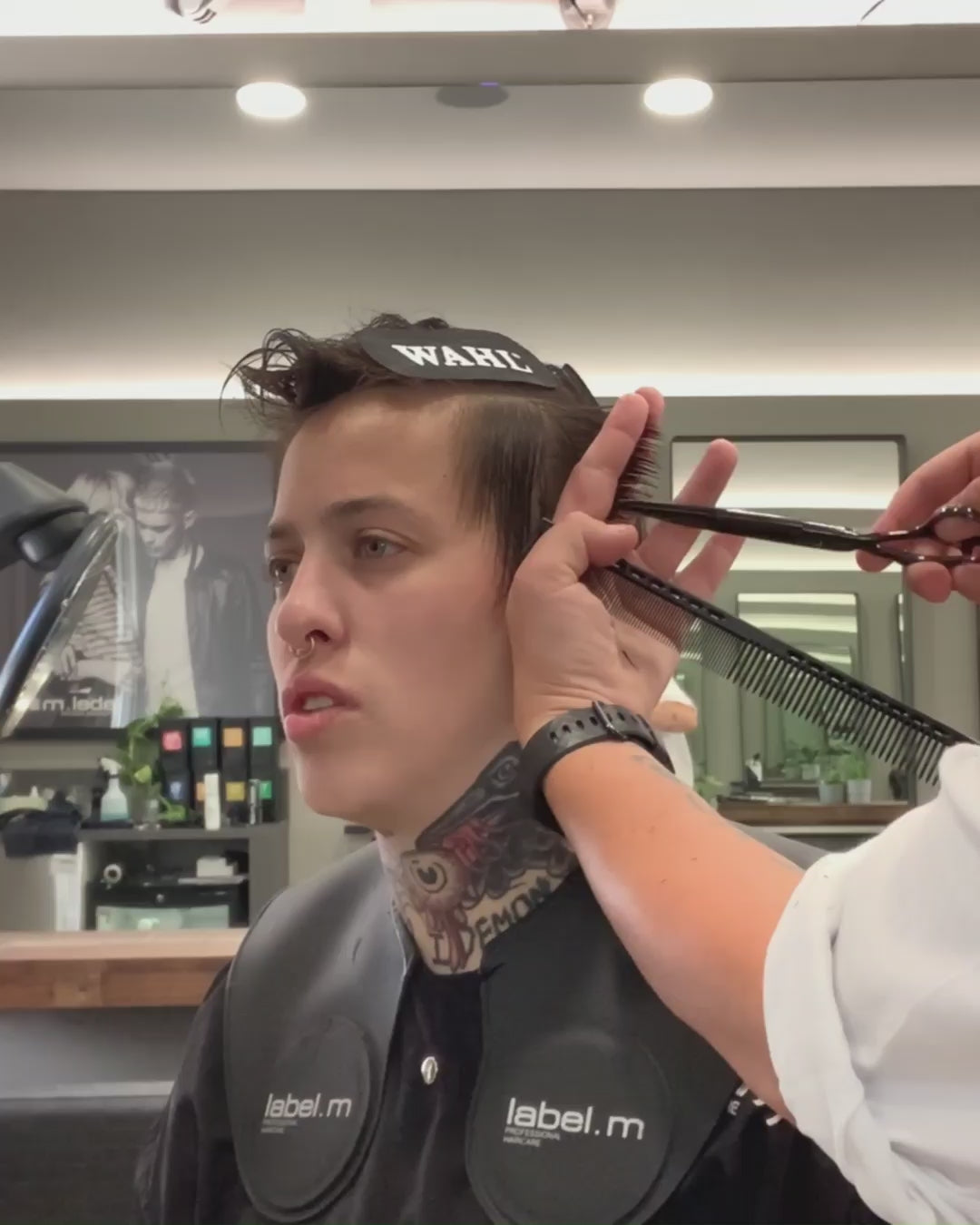
Barbers reach for scissors more than you'd think, especially for point cutting, scissor-over-comb work, and blending the top. And when precision really counts, a dragging blade or awkward handle shows up straight away in the finish.
Blade Length and Why It Matters in Barbering
Shorter blades, around 5 to 6.5 inches, give barbers the feedback and steadiness that close work around necklines and ears actually needs. So when the blade length creeps up, that tactile control goes with it—and the work shows it.
What Tools Does a Hairdresser Need?
Hairdressing kits need to handle longer hair, thicker textures, and appointments that can run on a bit. So naturally, the tools have to suit that kind of work too.
Precision Scissors — The Heart of the Hairdresser's Kit
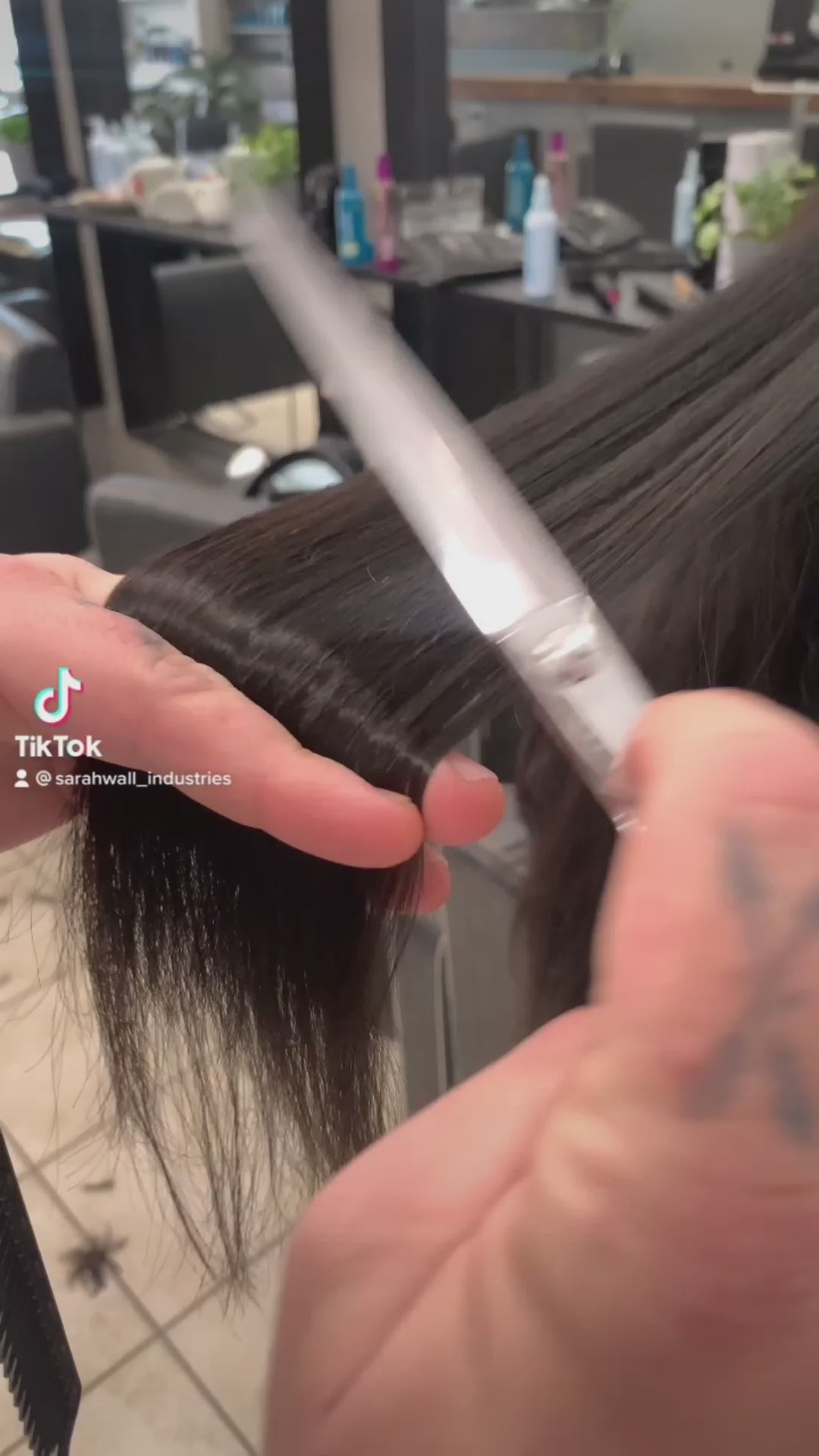
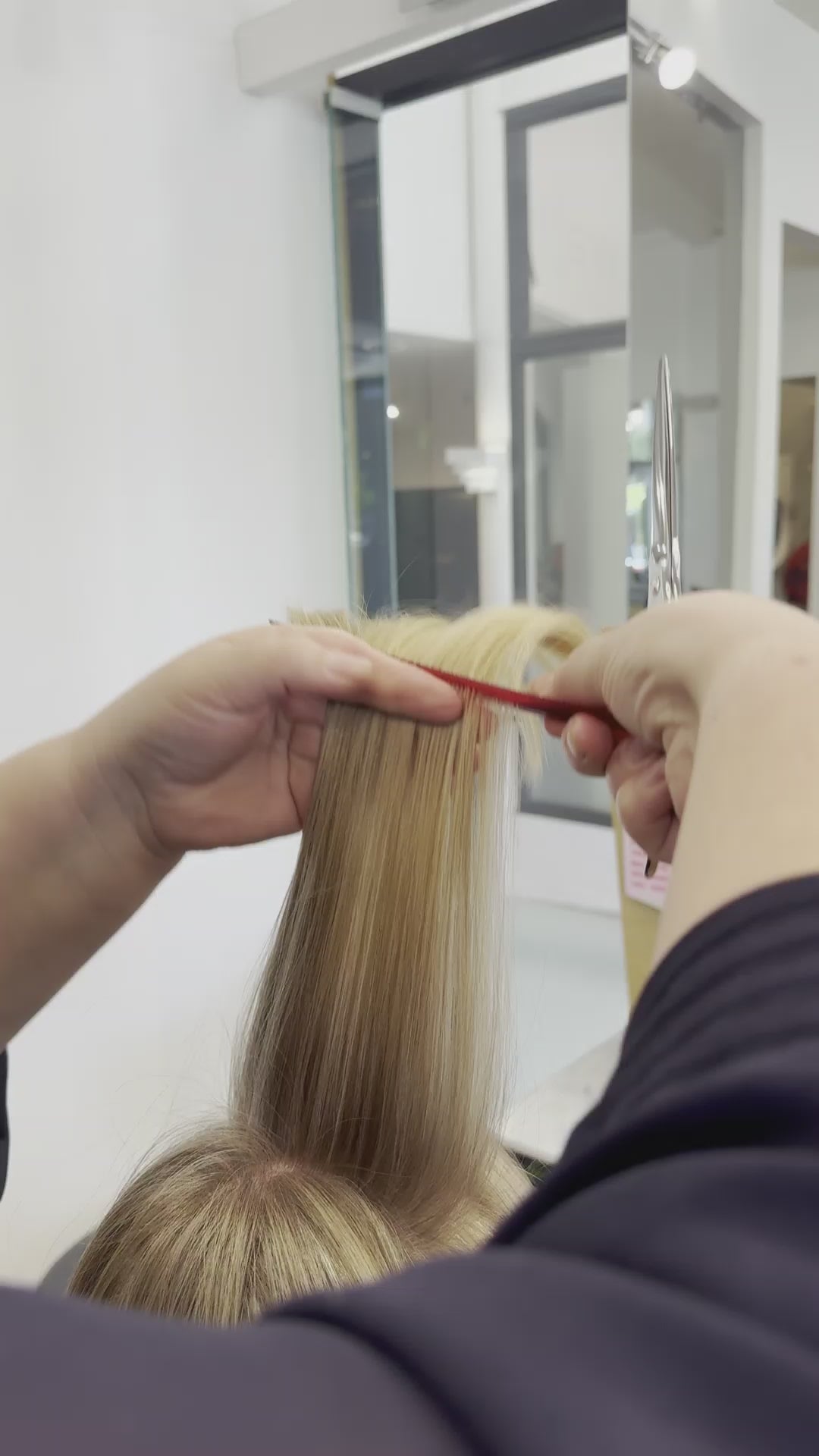
Blade length in the 5.5 to 7-inch range suits most hairdressing work, simply because longer sections need more reach to cut cleanly.
So when you're moving through a full day of clients, that extra length isn't just nice to have — it actually holds up better under the volume.
Thinning Shears and Texturising Scissors Explained
Thinning shears remove bulk without shortening length — useful for thick hair or clients wanting movement without a dramatic shape change. Texturising scissors soften lines and add dimension.
Both are standard hairdresser kits and rarely appear in a barber's setup.
Why Does Handling Ergonomics Matter More in Salon Work
Hairdressers usually keep scissors in hand for longer stretches, especially through detailed work. So the strain builds up more steadily through the wrist, shoulder, and hand.
Handle design directly affects how the body absorbs those repetitive movements over a full day.
Barber vs Hairdresser Scissors — The Core Differences
Blade length, handle angle, and balance are the bits you notice once they’re actually in your hand. And that’s where the difference shows up, because each pair is built around a very specific way of cutting.
Blade Design and Cutting Edge
Convex edges—sharp, smooth-gliding blades—are the professional standard across both trades.
Blade geometry varies more in hairdressing scissors depending on the technique they're designed for. Serrated edges appear in entry-level or student scissors; quality professional tools in both trades move past this.
Handle Type — Opposing, Offset, or Crane?
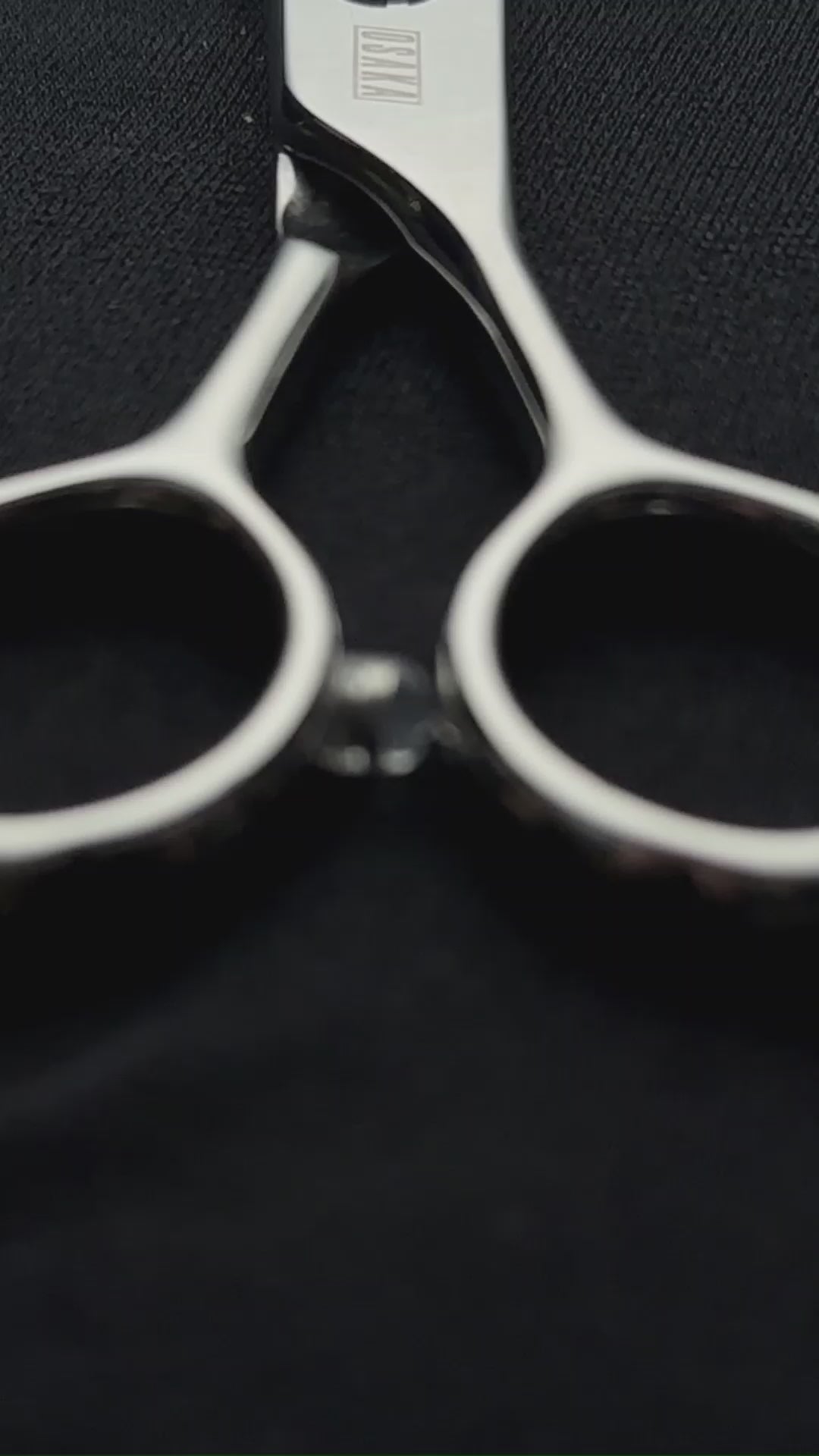
Opposing handles sit symmetrically—the traditional design. Offset drops the thumb ring lower, reducing elbow elevation and shoulder strain. Crane handles go further, designed for stylists who naturally hold their elbow high.
Hairdressers doing long sessions have largely shifted to offset or crane. Barbers often prefer opposing or mildly offset grips.
Steel Quality and Durability
Most professionals still look to 440C and cobalt Japanese steel because it holds up where it counts. And once edge retention, sharpness, and sharpening frequency come into it, cheaper scissors can get expensive pretty quickly.
Weight, Balance, and Fatigue Over a Full Workday
A peer-reviewed study in Cureus (Ota et al., 2024) found that resistance change at the blade tip was the strongest predictor of comfort — scissors requiring uneven closing force fatigue the hand faster, even when total force is low.
Meaning, scissors that require uneven or escalating force to close fatigue the hand faster, even when the total force is low. That compounds across a full workday.
How the Wrong Scissors Can Affect Your Work
Mismatched tools don't just affect the cut. They affect the professional holding them.
The Impact on Hair Quality and Finish
A barber using long hairdressing scissors loses the close-control feedback needed for tight fades. A hairdresser using short barber scissors struggles through longer sections.
The result is more passes, more corrections, and a finish that never quite lands where it should.
Repetitive Strain and Long-Term Hand Health
A 2024 study in the Revista Brasileira de Medicina do Trabalho (Lopes et al.) found that 52% of beauty salon professionals showed clinically significant musculoskeletal disability, with female respondents reporting pain onset after just three hours of work.
There was also a moderate correlation between years in the profession and severity of pain—this compounds without intervention rather than resolving with experience.
What Australian Professionals Should Know
Hairdressing has long been treated as low-risk, but the occupational health literature disagrees.
Research in Promoting Health for Working Women (Polychronakis et al., Springer, 2008) linked hairdressing specifically to musculoskeletal injury from poor ergonomic tool design—not just posture or hours.
For salon owners, that reframes scissors selection as a duty-of-care decision.
How to Choose the Right Professional Scissors for Your Role
Buying without a clear brief is how professionals end up with a drawer full of tools that almost work.
Questions to Ask Before You Buy
A few simple questions can narrow it down fast. The right fit usually shows up once you’re honest about how you actually work.
- What is your main cutting technique?
- How long are scissors actually in your hand each day?
- Do your wrists or shoulders start to feel it after a full shift?
Those answers usually point you towards the right handle style, blade length, and steel type.
What to Look For in a Quality Pair of Barber Scissors
Blade length between 5 and 6.5 inches suits most barber work. Look for a convex edge, Japanese steel construction, a comfortable thumb ring fit, and balanced weight that doesn't pull the wrist forward.
What to Look For in a Quality Pair of Hairdressing Scissors
Go slightly longer—5.5 to 7 inches. Offset or crane handles reduce shoulder load over long sessions. Japanese 440C or cobalt steel holds its edge through high-volume days and repays the investment in reduced sharpening frequency.
Professional Hair Scissors in Australia — What the Market Looks Like
Quality expectations have risen across the Australian professional tools market, and both barbers and hairdressers are doing more research before they buy.
Growing Demand for Quality Scissors Among Australian Barbers and Hairdressers
More professionals are treating scissors as a long-term investment. The question has shifted from "how much" to "what steel" and "how long will it hold"—a genuine reflection of craft pride across both industries.
What Australian Professionals Prioritise When Choosing Tools
Sharpness and edge retention come first. Ergonomics follow, particularly for hairdressers in high-volume salons.
Warranty and sharpening support matter too, especially outside major cities where finding a reliable scissor technician takes real effort.
Where to Find Premium Scissors in Australia
Buying from a specialist supplier usually gives you clearer product details, better advice, and proper support after purchase. And when you’re spending real money on professional Japanese tools, that extra help matters more than people think.
Frequently Asked Questions
A few questions that come up regularly — worth answering properly.
Can a barber use hairdressing scissors?
A barber can use hairdressing scissors, sure, but the cut really decides that. For fades and close detailing, a longer blade can feel hard to manage. It gives you less feedback where the work actually needs it most.
What is the difference between barber scissors and salon scissors?
Barbers generally favour shorter blades for close, controlled work. Hairdressers tend to go longer, and with good reason, given the sections they're cutting through.
But the real difference also comes down to handle shape, blade build, and how the scissors sit in the hand.
How much should professional barber or hairdressing scissors cost in Australia?
Professional scissors usually start around $150 to $250 AUD, with Japanese steel often landing between $300 and $600. And if you cut full-time, premium cobalt pairs over $800 can make sense because they tend to last better.
How often should I sharpen my professional scissors?
For full-time professionals, every three to six months is a solid sharpening guide. And if the hair starts bending, your hand feels it more, or the blade tip goes a bit uneven, it’s probably time.
Are expensive scissors worth it for barbers and hairdressers?
For full-time work, yes, they’re usually worth the money. Better steel stays sharper for longer, needs less maintenance, and can help reduce the hand and wrist strain that poor scissors quietly build up.
What scissors do professional hairdressers recommend?
Japanese steel with offset or crane handles comes up consistently. Scissors with smooth, consistent closing resistance—the factor most strongly linked to comfort in clinical research — earn the strongest long-term endorsements.

Find the Right Scissors for Your Personal Comfort
If you’re still reading, you probably already get that choosing scissors properly matters. The scissors you pick up every single day have a real effect on your results, how your hand holds up, and whether the work stays manageable long term.
OSAKA Scissors has spent over 30 years working alongside professionals across Australia and internationally, building a range grounded in Japanese steel, precise construction, and handle design that actually holds up through a full working day.
Whether you're a barber after high-control short blades, a hairdresser looking for an offset handle that takes the load off your shoulder, or a salon owner building out a professional kit, there's an OSAKA pair built for what you do.
Browse the full range of premium scissors and explore steel and handle options here. You can also reach out to us for a personalised recommendation through here. The right tool is a professional choice. We're here to help you make it.